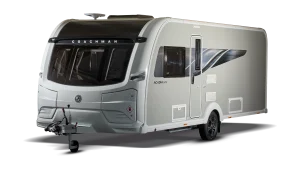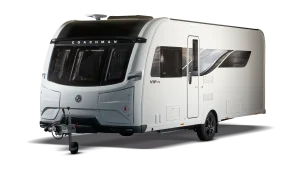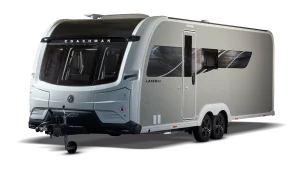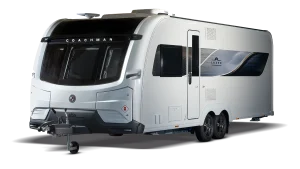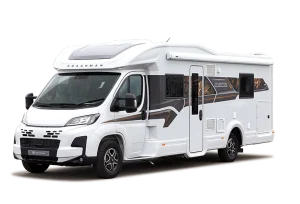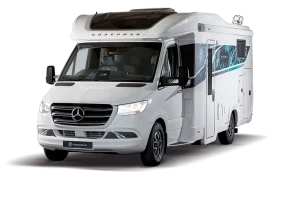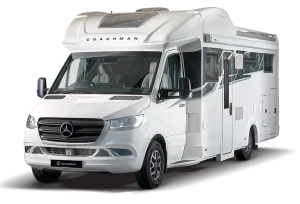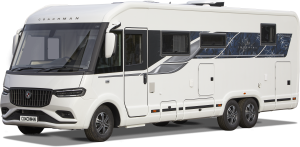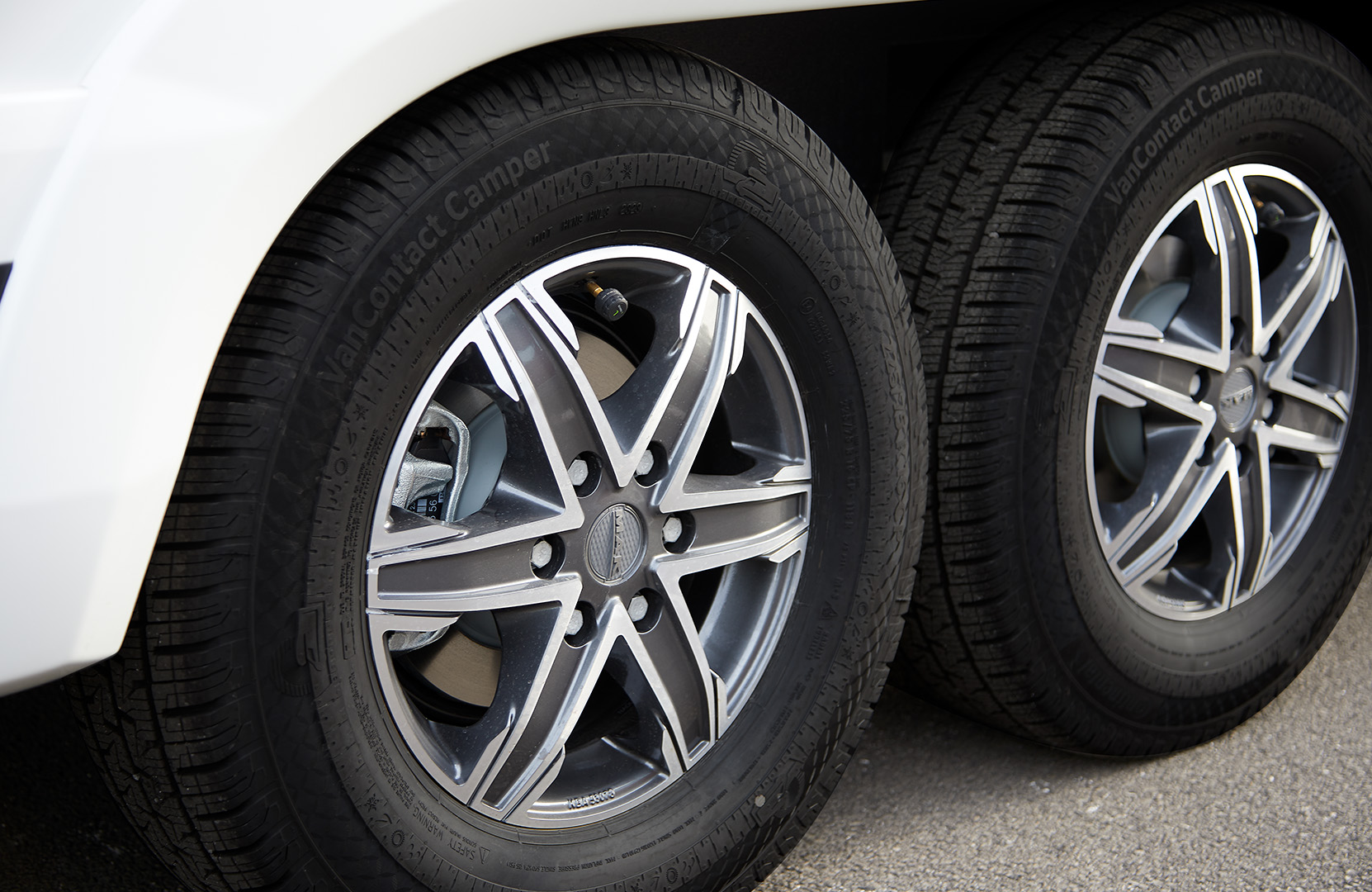
A single axle caravan has one pair of wheels, while a twin axle has two. Twin axles carry greater loads, support longer layouts and often feel more settled when towing. Single axles tend to be lighter, easier to manoeuvre, cheaper to maintain and simpler to store. Neither is automatically an upgrade. single axle vs twin axle caravans, the right choice depends on the layout you want, your tow car, where the caravan will be kept and how you intend to use it.
The short answer
Choose a single axle if easier manoeuvring, lower overall weight, a wider choice of tow cars or simpler storage are your priorities.
A twin axle makes more sense if you want one of the largest layouts, take longer trips regularly, or need the space and carrying capacity that comes with a bigger tourer.
The axle count should rarely be the first thing you decide. Start with the layout and size that suit you, then check that your car, your storage and your touring habits work with the caravan that delivers them.
What actually changes when you add a second axle?
The basic difference is how the caravan’s weight is supported. A single axle carries the caravan on two road wheels. A twin axle uses four, spreading the load across two axles instead of one.
That second axle is what lets manufacturers build longer and heavier caravans without asking one axle and a single pair of tyres to carry everything. It is why most of the largest floorplans are twin axle, since the extra body length can go into bigger lounges, permanent bedrooms, more generous washrooms and additional storage.
It does not follow that every large or wide caravan needs two axles. Width and axle count are separate decisions, and Coachman’s 8ft-wide Acadia 545 Xtra and 575 Xtra are both single axle. If width is the question you are really trying to answer, our guide to 8ft wide caravans covers that separately.
The case for a twin axle
Stability on the road
One of the main reasons buyers favour twin axles is how they feel once you are towing. With the weight shared across four wheels and a longer chassis beneath most twin axle layouts, the outfit tends to sit settled at cruising speed and reacts less to changes in road surface, crosswinds and passing traffic.
That does not make a twin axle immune to instability. Correct loading, tyre condition, noseweight and proper matching to the tow car matter whichever configuration you choose. Distribute the weight evenly, keep heavy items low and close to the axle area, and stay within the manufacturer’s towing and tow-ball limits.
A properly loaded, well-matched single axle caravan tows very well. Buying a twin axle is not a substitute for getting the fundamentals right.
The largest layouts
This is where twin axles make their strongest case. If you want maximum internal space, the floorplan you prefer may only exist on a twin axle chassis.
The extra length lets manufacturers create distinct living zones rather than asking one area to do several jobs, which is how you end up with a large front lounge, a permanent island bed, a full washroom and proper wardrobe space in the same caravan.
If bed layout is one of your priorities, our guide to fixed bed caravan layouts explains the options. Sometimes the floorplan settles the axle question for you: if the layout you want only exists as a twin axle, the real decision is whether you will accept the extra size and weight to get it.
Carrying capacity
Larger caravans often carry higher MTPLM figures and can offer more payload, which helps families, longer trips and anyone taking a lot of equipment. Do not assume four wheels automatically means a generous payload, though. Larger furniture, luxury equipment and extra appliances all add weight, so always check the actual payload figure for the specific caravan.
The case for a single axle
Manoeuvring by hand
A single axle is far easier to turn and position manually. Because the caravan pivots around one axle, you can make fairly tight changes of direction while pushing it on a driveway or adjusting it on a pitch.
A twin axle resists tight turns. As it turns, the two axles follow slightly different arcs and the tyres scrub across the surface, which you can feel immediately if you try to push one by hand. That is why a motor mover becomes so attractive on a large twin axle, since it takes the physical work out of positioning the caravan accurately.
Storage and access
Single axle caravans also tend to be shorter and lighter, which makes them easier to get through a restricted entrance, onto a driveway or into a storage compound.
Axle count does not tell you the full dimensions, though. There are long single axle caravans and relatively compact twin axles, so measure the actual model you are considering. Think about gate width, turning space and whether you need room to walk down both sides once it is parked. Pitch access matters too, since a longer caravan may sit comfortably on the pitch itself and still be awkward through a tight site entrance.
Running costs
A twin axle has two extra road tyres, so there are four to inspect, maintain and eventually replace rather than two, along with the additional wheel and braking components that come with the second axle. Those costs are modest against the overall expense of ownership, but they are real.
Use the pressures specified for your particular caravan rather than assuming a twin axle takes the same pressure as a comparable single axle. The correct figure is model-specific and is not determined by axle count.
More choice of tow car
A lighter caravan is compatible with a wider range of tow cars, whereas moving up to a large twin axle narrows the field considerably. That matters if you already own the car and would rather not have a caravan purchase trigger a vehicle change as well. Start from your car’s actual towing limits rather than deciding that a particular engine size or body style looks big enough.
Towing, licences and weight
Axle count does not determine which driving licence you need. Weight does.
Drivers who passed their category B car test before 1 January 1997 are usually entitled to drive a vehicle and trailer combination up to 8,250kg maximum authorised mass, though you should check the entitlements shown on your own licence.
For drivers who passed from 1 January 1997, category B allows a trailer up to 3,500kg MAM with the combined MAM of vehicle and trailer limited to 7,000kg. Since 16 December 2021, drivers in England, Scotland and Wales no longer have to pass a separate B+E car and trailer test to gain that entitlement. Northern Ireland is different, where B+E testing requirements remain in place depending on when you obtained your licence and what you intend to tow, so NI drivers should check their individual entitlement before buying.
You will also come across the 85% towing guideline, which suggests anyone new to towing aims for a caravan MTPLM no greater than around 85% of the tow car’s kerbweight. It is guidance rather than a legal limit, and the manufacturer’s towing capacity, gross train weight and the other legal weight limits always take precedence. Our guide to MRO, MTPLM and user payload explains the caravan figures in more detail.
Speed limits are the same either way. Towing a caravan with a car, the national maximum is 50mph on single carriageways and 60mph on dual carriageways and motorways, where no lower posted limit applies.
Motor movers, servicing and practical ownership
You do not need a motor mover simply because you have bought a twin axle, but it can be extremely useful. Turning a twin axle tightly by hand takes real effort because of tyre scrub, and a mover lets you position the caravan accurately without pushing it or repeatedly shuffling it with the tow car.
Twin axle mover systems can also be more involved than single axle installations, because traction has to be provided across more of the caravan’s wheels. The equipment, installation and battery requirements can all cost more.
A motor mover is not standard on any current Coachman caravan, so check the dealer and factory options when you order.
There are practical maintenance differences too. A twin axle is more awkward to lift, and dealing with a wheel problem at the roadside takes longer. Whatever you buy, understand the manufacturer’s jacking procedure before you need it.
Which Coachman caravans are single or twin axle?
The current collection includes both configurations, and the split shows clearly that axle count is not the same thing as range level or body width.
The Coachman Acadia offers both. The 545 Xtra and 575 Xtra are single axle, while the larger 655 Xtra and five-berth 660 Xtra are twin axle.
The Coachman VIP is entirely single axle across its five layouts, which is one of the practical differences covered in our Acadia vs VIP comparison.
The Coachman Laser spans both. The 545 Xtra and 575 Xtra are single axle, and the longer 845 Xtra, 855 Xtra, 865 Xtra and 875 Xtra are twin axle.
The Coachman Lusso also offers both rather than being entirely twin axle. The Lusso I is an 8ft-wide single axle caravan, while the Lusso II, III and IV use twin axles.
So you can have an 8ft-wide Coachman without moving to a twin axle, and you can move to the top of the range and still keep a single axle in the Lusso I.
Which should you choose?
Where will you keep it?
Start here. Measure your driveway, gate or storage space, and think about the approach as well as the final parking position. A caravan that technically fits but needs a very tight turn every time you come home gets frustrating quickly.
How will you move it on the pitch?
Be realistic about who is actually doing the pushing. If you expect to reposition it by hand, a single axle has a clear advantage. If you want a large twin axle, budget for a motor mover rather than assuming you will manage it manually.
What does your tow car allow?
Check the specific MTPLM against the towing capacity, train weight and licence entitlement that apply to your combination. Do not choose the caravan first and hope the numbers work afterwards.
Which layout do you actually want?
This may settle the whole question. If the floorplan that suits you comes on a single axle, you can then decide whether a twin axle offers anything you actually need. If the lounge, bedroom or family arrangement you want only exists in one of the larger twin axle models, the layout has made the decision for you.
Axle count is a means of delivering the caravan you need. It should not become the objective in its own right.
FAQs
Is a twin axle caravan harder to tow?
Not necessarily. Twin axles feel settled on the road, but they are usually larger and heavier, so the tow car has to be properly matched. Their biggest practical disadvantage is manoeuvring at low speed or by hand rather than towing on the open road.
Are twin axle caravans more stable?
They can feel more settled, because the load spreads across four wheels and most twin axles have a longer chassis. Correct loading, noseweight, tyre condition and tow-car matching still matter, though. A badly loaded twin axle can still become unstable.
Do you need a special licence for a twin axle caravan?
Not specifically. Licence requirements are based on vehicle and trailer weights rather than the number of axles. Current category B entitlement allows qualifying drivers to tow trailers up to 3,500kg MAM within the applicable combined weight limit. Northern Ireland has different B+E rules.
Do twin axle caravans need a motor mover?
No, but one makes ownership considerably easier. Twin axles resist tight manual turns because the tyres scrub against the surface, so a mover is genuinely useful for positioning the caravan accurately on pitches and driveways.
Are twin axle caravans more expensive to run?
They can be. A twin axle has four road tyres instead of two, plus the extra wheel and braking components that go with the second axle. It may also need a more expensive motor mover, and because larger twin axles are heavier, potentially a larger tow car.
Can you get a twin axle caravan on a normal pitch?
Usually, but do not assume every pitch takes every caravan. Check the overall length against the site’s pitch and access restrictions before booking, particularly with one of the longest layouts.
Choose the caravan before the axle
Both configurations have clear advantages. Start with the layout, dimensions and weight that suit your touring, then decide whether one axle or two is the best way to get there. Explore the wider Coachman caravan collection and find your nearest Coachman dealer to compare the layouts and see how the two feel in person.