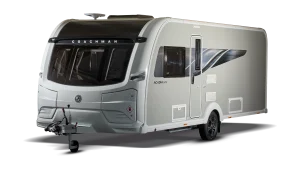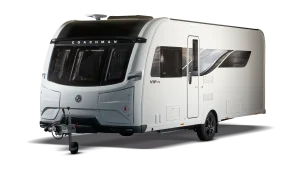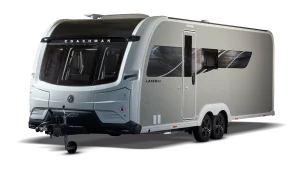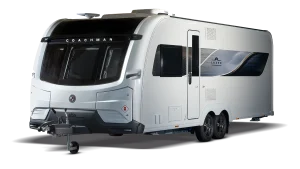
A luxury touring caravan should offer more than an expensive interior. What separates a genuinely premium tourer is the quality of its construction, its protection against water ingress, the heating and hot water systems, the electrical setup, the usable payload, the everyday fittings and the warranty and dealer support behind it. A smart media wall and expensive upholstery mean very little if the fundamentals underneath them have been compromised.
If you are still working through the basics of size, berths and towing requirements, start with our guide to choosing a touring caravan. This piece focuses on what deserves closer inspection once you move into the premium end of the market.
What actually makes a caravan luxury?
Luxury is one of the easiest words to put in a caravan brochure and one of the hardest to define.
Premium upholstery, designer colour schemes, ambient lighting and feature walls all shape how a caravan feels, and they matter if you spend a lot of time inside. But they are the visible layer.
A genuinely premium tourer also shows where the money has gone in the areas that are harder to photograph. Look at the structure underneath the furniture, the heating system, the payload left once the standard equipment is fitted, the electrical capacity and the warranty behind the caravan.
A useful test when viewing is to ask what is behind the panel rather than what is printed on it. Ask how the body is constructed and how the roof and walls are joined. Ask what the worktops are made from rather than just looking at the finish. Ask which major appliances are standard and which are options.
Surface finish still counts, but at this end of the market it should sit on top of good engineering rather than compensate for its absence.
Construction and how it keeps water out
Construction should be one of the first things you investigate. Water ingress causes extensive damage to the structure and interior, and it has a significant effect on resale value, particularly where there is no clear record of when the problem appeared or how it was repaired.
Many modern premium caravans use bonded construction, where structural sections of the walls, floor and roof are bonded together rather than relying solely on traditional mechanical fixings. Do not stop at the phrase “fully bonded”, though. Ask what materials are used in the floor, walls and roof, how the major joints are formed and what protection the manufacturer provides against water ingress.
The joints matter because water rarely enters through the middle of an intact wall panel. The areas around windows, doors, roof fittings, awning rails and body joints need careful sealing and regular inspection throughout the life of the caravan.
Warranty terms are worth reading before you buy, not when you need to make a claim. If a manufacturer offers extended water ingress cover, check:
- How long the cover lasts
- Whether it applies to the first owner only, or transfers on sale
- What servicing schedule must be followed, and who is authorised to carry it out
- Whether damp reports and invoices must be retained
- Which joints, windows or fittings are excluded
Do not assume a ten-year headline means you can ignore servicing for ten years. Extended cover almost always carries maintenance conditions, and missing a service can invalidate it.
When buying used, ask to see the damp reports alongside the service history. A stamped service book is useful, but the actual damp readings tell you far more about the condition of the body. When buying new, ask your dealer what the annual service includes and what paperwork you need to keep.
Heating, hot water and year-round use
A premium interior is less impressive when the caravan is uncomfortable on a cold October evening. If you plan to tour beyond the height of summer, heating specification deserves serious attention.
A blown-air system heats air and distributes it through ducts around the caravan. It is effective and widely used across the touring market. Wet central heating works more like domestic heating, circulating heated fluid through convectors around the caravan for a more even warmth without relying on air being blown through outlets.
Neither should be judged on the name alone. What matters is how well heat reaches the particular layout you are considering, so check the bedroom, the washroom and the areas along external walls. Ask whether the washroom has a heated towel rail, and how quickly the hot water recovers if two people shower one after the other.
At the premium end you may also find floor heating, air conditioning and improved insulation. If winter touring matters, ask what insulation classification the caravan achieves, whether the water system is protected for cold-weather use, whether any tanks or pipes sit in particularly cold areas, and whether the heating can be programmed to come on before you get up or before you return to the caravan.
The aim is not simply a powerful heater. It is a caravan that stays comfortable throughout the areas you actually use.
The electrical and off-grid setup
Electrical specification is increasingly where the premium sits, because it is what determines whether you can tour meaningfully away from an electric hook-up.
Start with the leisure battery. Find out what capacity the caravan is designed to accept and whether there are restrictions on battery type. If you are considering lithium, check the charging system is compatible rather than assuming you can swap the battery later.
Then look at solar. A roof-mounted panel helps maintain the battery and extends how long you can stay off hook-up, though how useful it is depends on panel output, battery capacity, the weather and how much power you use.
The control system deserves attention too. A good panel makes the important information easy to read, which might include battery voltage, water levels, lighting and pumps. Do not be distracted by a touch screen simply because it looks more sophisticated. Ask what information it actually gives you and how easy it is to operate.
If off-grid touring matters, work backwards from the equipment you intend to run. Battery capacity and solar provision should support your habits rather than just sounding impressive on a specification sheet.
Payload, weight and what you can actually carry
This is the easiest thing to overlook when buying a highly specified caravan, and the one that causes the most regret.
A premium caravan carries more equipment. Larger beds, heavier furniture, heating systems, air conditioning, automatic levelling, solar and extra appliances all add weight. The figure that matters is not how much the caravan weighs empty, but how much usable payload is left once it is all fitted.
That payload has to cover everything you add for touring: clothing, food, bedding, cookware, outdoor furniture and the rest. Options matter here too. If you add equipment at the factory or the dealership, ask whether its weight comes out of the available payload or whether the caravan can be plated differently to accommodate it.
A luxury caravan with impressive storage but very little legal carrying capacity is a compromise rather than an upgrade. Having somewhere to put something does not mean you have the payload to carry it.
Larger premium layouts also tend to be heavier, and many of the biggest use twin axles, so the tow car has to be part of the decision from the start. Our guide explains what MRO, MTPLM and user payload mean and the figures to compare before you commit.
Fixtures, fittings and the things you touch every day
This is where you can carry out your own quality inspection without being an engineer.
Open everything.
Try the overhead lockers several times. Pull out the kitchen drawers, open the wardrobes, use the catches, lift the bed frame and sit on the upholstery rather than looking at it. Check that drawers close smoothly and furniture feels solid, and look at the hinges and catches rather than only the locker fronts. A premium finish should not stop at the surface you can see.
In the kitchen, run the tap and inspect the worktop, sink, hob and preparation space. Imagine cooking a meal rather than viewing a display. Do the same in the washroom: step into the shower and close the door, stand at the basin, and work out where towels and toiletries would actually go.
It feels slightly excessive on a busy forecourt, but these are the things you will use every day. Showroom presentation makes almost any new interior look good, and repeatedly operating the fittings is the most reliable indicator of build quality available to a non-expert.
Layout, because specification cannot fix the wrong floorplan
You can buy the highest specified caravan available and still choose the wrong one. If one person climbs over the other every time they get out of bed, an expensive heating system will not solve it. If the lounge does not seat your family comfortably, more technology will not make the floorplan work.
Settle the layout before getting carried away with equipment. Our guide to fixed bed caravan layouts explains the differences between island beds, fixed singles and the other permanent arrangements, and if you are weighing up a wide-body tourer, our guide to 8ft wide caravans covers whether the extra interior room is worth the extra external width.
Warranty, servicing and the dealer behind it
The aftercare package is part of the caravan you are buying, and it is the part you find out about three years in.
Compare the length of the manufacturer’s warranty, but look closely at what it covers. Pay particular attention to water ingress protection, appliance warranties and any conditions tied to annual servicing.
Ask where warranty work is carried out. The dealer you buy from may have specific responsibilities for repairs, and travelling a long way every time work is needed becomes inconvenient quickly. Consider the wider dealer and approved service network too, because if you tour around the country, support beyond your selling dealer is worth having.
Parts availability matters as well. Ask how replacement body panels, furniture components, windows and model-specific fittings are handled several years after production. A caravan is a long-term purchase, and support should extend beyond the current brochure cycle.
Read the warranty paperwork yourself rather than relying on the summary given during a sales conversation. The terms you have to follow in year six are as much part of the purchase as the features you enjoy on day one.
Buying new or used
Buying new gives you the current specification, no previous usage history, the full manufacturer warranty and certainty over how the caravan has been maintained from day one. The trade-off is cost and depreciation.
A used premium caravan can put a higher specification within reach for less money, particularly once the first owner has absorbed the initial depreciation. Condition becomes far more important, though. Look for a clear service record and evidence of regular damp testing, and check that warranty requirements have been followed if any manufacturer cover is still being advertised with the caravan.
Inspect appliances, upholstery, furniture, windows and external seals carefully, ask which equipment was standard when new, and make sure any aftermarket work has been installed properly, especially electrical equipment, motor movers and self-levelling systems.
Neither is automatically the better buy. A well-maintained used caravan can represent excellent value, while buying new gives you more control over specification and history. Judge the whole package rather than the age alone.
Questions to ask before you commit
Before buying, ask:
- How is the body constructed, and which parts of the floor, walls and roof use bonded construction?
- How long is the water ingress warranty, and exactly what servicing is required to keep it valid?
- What heating and hot water system is fitted, and is the caravan designed for the time of year I intend to use it?
- What is the usable payload once the options I have chosen are fitted?
- Which electrical, solar and battery features are standard, and which cost extra?
- How often must the caravan be serviced, and where can authorised servicing and warranty work be carried out?
- Which features on this particular caravan are standard rather than dealer or factory options?
- How far will I have to travel if the caravan needs warranty or repair work?
If the answers are hard to get before you buy, they are unlikely to get easier afterwards.
FAQs
What makes a caravan a luxury caravan?
A luxury caravan combines high-quality fixtures and interior materials with strong construction, effective heating, useful electrical equipment, sufficient payload and comprehensive aftercare. Premium upholstery alone does not make a caravan luxurious if the underlying construction and practical specification have been compromised.
Are luxury caravans worth the extra cost?
They can be, if you value the equipment, interior quality, heating, space and convenience they bring. The extra cost makes most sense when those features improve how you actually tour. Paying for specification you rarely use offers much less value.
What is the most important thing to check when buying a caravan?
Construction, condition and water ingress belong at the top of the list. On a used caravan, check the damp and service history. On a new one, understand how the body is built and read the water ingress warranty conditions before you commit.
Do luxury caravans hold their value better?
A premium specification can support used demand, but there is no guarantee a luxury caravan retains a higher percentage of its original value. Brand reputation, age, condition, service history, layout and wider market demand all play a part.
Can you use a luxury caravan in winter?
Many premium tourers are equipped for use outside the summer season, but check the individual caravan’s heating system, insulation, water system and cold-weather specification. A high purchase price does not automatically make a caravan suitable for every winter condition.
Is a twin axle better for a luxury caravan?
Not automatically. Twin axles are common on larger and heavier luxury caravans because they suit longer layouts and higher weights. A single axle is easier to manoeuvre and may suit you better if you do not need the extra size. Judge it on the individual caravan, your tow car and how you plan to tour.
Look beyond the specification sheet
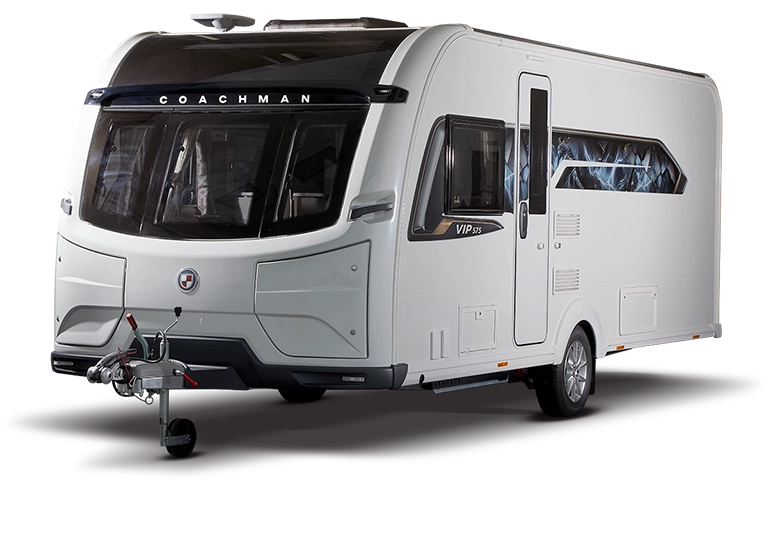
Coachman’s touring caravan collection runs from premium touring models through to the flagship Lusso. Every current Coachman caravan is built using Advanced Bonded Construction and carries a 10-year water ingress warranty, provided the caravan is serviced annually in line with the required schedule.
Use the Coachman dealer finder to see the range in person. The best way to judge premium build quality is still to open the doors, work the fittings, sit in the furniture and inspect the details for yourself.