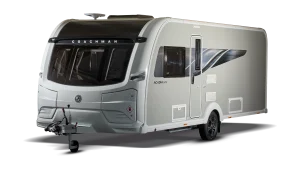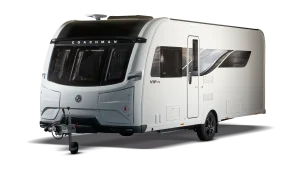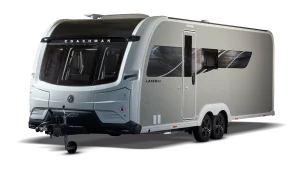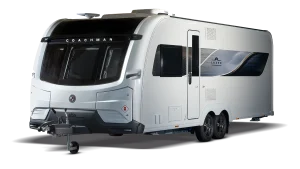
Autumn and winter touring can be comfortable in a well-prepared modern caravan. Most of the preparation comes down to four things: keeping water out, keeping heat in, protecting the water system when temperatures fall below freezing, and managing condensation inside. Get those right and there is no reason your touring season needs to finish when summer does.
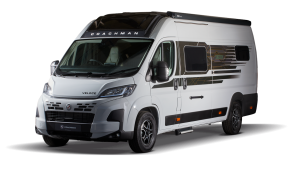
If you own a motorhome rather than a caravan, see our separate guide to preparing your motorhome for a winter getaway.
Start with a damp check and the seals
Before you think about heating or winter bedding, make sure rainwater is staying outside the caravan. Autumn brings long spells of rain, and repeated freezing and thawing finds any weakness in a seal or joint. Left unnoticed, water ingress damages internal furniture and structural materials.
Walk around the caravan and inspect the places water is most likely to get in: window surrounds, roof lights and roof-mounted equipment, the entrance door, awning rails, external locker doors, body joints and service points. Look for sealant that has cracked, lifted or pulled away from the surface next to it.
Inside, look for unusual staining, soft areas around windows or walls and any persistent musty smell. None of those automatically means a serious problem, but all of them are good reasons to have the caravan inspected properly.
An annual service should also include damp testing, which gives you actual moisture readings rather than relying on what you can see and smell.
Servicing matters more still where water ingress cover is involved. Every current Coachman caravan carries a 10-year water ingress warranty, provided the caravan is serviced annually in line with the required schedule. Keep the service records, invoices and damp reports as evidence that the maintenance has been done. Our guide to buying a luxury touring caravan explains why construction, servicing and water ingress cover matter throughout ownership, not just at the point of purchase.
Heating and hot water
A reliable heating system is what turns cold-weather caravanning from endurance into something you actually look forward to. Have the system checked before your first autumn trip rather than discovering a fault on a cold pitch.
Coachman’s current caravan ranges use Alde wet central heating and hot water, and the Acadia, VIP, Laser and Lusso are all cold-chamber tested to EN1645 Grade 3 for heating and insulation. That classification is useful because it gives you an objective measure of performance rather than a marketing description.
If your caravan has Alde heating, check the heating fluid level and find out when the glycol was last changed. Alde-approved antifreeze protects against frost and corrosion for five years in normal use, after which it should be replaced, because that protection deteriorates over time. Record the date of the last change alongside the caravan’s other servicing information.
Before you leave home, run the heating long enough to confirm the boiler, circulation and controls are all working. Check that warmth actually reaches the lounge, bedroom and washroom rather than just confirming the boiler fires up.
On site, aim for steady warmth rather than letting the caravan get very cold and then heating it hard on arrival, since sudden temperature swings encourage condensation on cold surfaces. Keep internal doors open where you can so warm air circulates, particularly into the washroom and bedroom, and use the programmer if you have one. Waking up to a caravan that is already warm makes a considerable difference to a winter trip.
Water systems and freezing temperatures
Water needs the most care once the temperature drops below freezing. Frozen water expands, and if it is trapped in pipework, taps, pumps, filters or a water heater, that expansion damages components.
This is also the area where the instructions for your specific caravan matter most. When there is a risk of temperatures falling below freezing and the caravan is not in use, the water and toilet systems should be winterised and fully drained, opening the taps and using the caravan’s drain points so no water is left trapped in the system.
If you are actively using the caravan the situation is different, because the interior stays heated. Do not assume that protects every part of the system, though. External water is the vulnerable part: a water container and its connecting pipework sit directly in the outside temperature, so they freeze long before the heated interior becomes a problem.
If a hard frost is forecast:
- Check the winter-use instructions in your caravan handbook
- Keep the caravan adequately heated while the water system is in use
- Watch external water containers and connections for freezing
- Do not leave a full system unattended in freezing conditions with the heating off
- If you are leaving the caravan unused, drain the system as the manufacturer instructs
Do not improvise with the freshwater system. The correct drain-down process varies with the pump, water heater, onboard tank and other equipment fitted. If you plan to tour through winter regularly, it is worth learning where your caravan stores its fresh water and where the pipes run before the first freezing night, not during it.
Check the tyres, pressures and towing setup
Cold-weather touring changes conditions on the road as well as on the pitch.
Check the tyres before each trip for cuts, cracking, uneven wear or anything embedded in the tread. Set pressures cold, to the figure specified for your particular caravan and its MTPLM. Coachman quotes model-specific tyre pressures rather than one figure across the range, so work from your own model’s technical information.
Autumn and winter also bring wetter roads, poorer visibility and fewer hours of daylight. Allow more time and leave a bigger gap to the vehicle in front, because an outfit takes longer to respond than the tow car alone. The maximum towing limits are 50mph on single carriageways and 60mph on dual carriageways and motorways where no lower limit applies, and those are limits rather than targets. Conditions will often call for considerably less.
Try to plan unfamiliar routes so you are not arriving at a rural site for the first time in the dark.
Battery and electrics
Winter puts different demands on the electrical system. Lights run for longer, the heating runs for more hours, and devices spend more time charging inside. Cold conditions also reduce useful battery performance.
Make sure the leisure battery is properly charged and in good condition before you travel. A battery that is several years old and already struggling will show it far faster on a winter trip than on a summer weekend with hook-up.
Solar still contributes in autumn and winter, but be realistic. Daylight is shorter and the sun sits lower, so a panel that comfortably covers your habits in June will not replace the same energy in December. The current Lusso range includes a 120W roof-mounted solar panel as standard, and a 120W Truma roof-mounted panel is available as an option on the Acadia, VIP and Laser.
Any extra equipment you carry also has to fit within your available payload, so see our guide to MRO, MTPLM and user payload if you are adding winter kit.
Managing condensation and ventilation
One of the biggest mistakes in winter is assuming that shutting every vent makes the caravan warmer. It does the opposite of what you want.
You produce moisture simply by being inside. Breathing overnight adds water vapour to the air, and cooking, boiling a kettle and showering add a great deal more. When that warm, moisture-heavy air meets a cold window or external surface, it condenses. Ventilation is essential even when it is cold outside.
A few habits make a substantial difference:
- Never block fixed ventilation openings
- Use the kitchen extractor when cooking
- Open a roof light or window slightly when producing a lot of steam
- Use the washroom ventilation after showering
- Wipe visible moisture from windows in the morning
- Keep bedding and soft furnishings off cold external walls
Increase ventilation whenever condensation becomes a problem, using roof lights and window vent positions and keeping the doors between compartments open so air can move through the caravan.
This is another reason not to let the caravan get very cold overnight. Sensible background warmth raises the surface temperature of windows and walls while ventilation carries the moisture away.
Condensation is not the same thing as water ingress, but repeatedly letting moisture collect inside still creates damp conditions and encourages mould. The aim is warmth and ventilation together, not one at the expense of the other.
Inside the caravan: staying comfortable
Technical preparation matters, but winter touring should also be enjoyable once you have arrived.
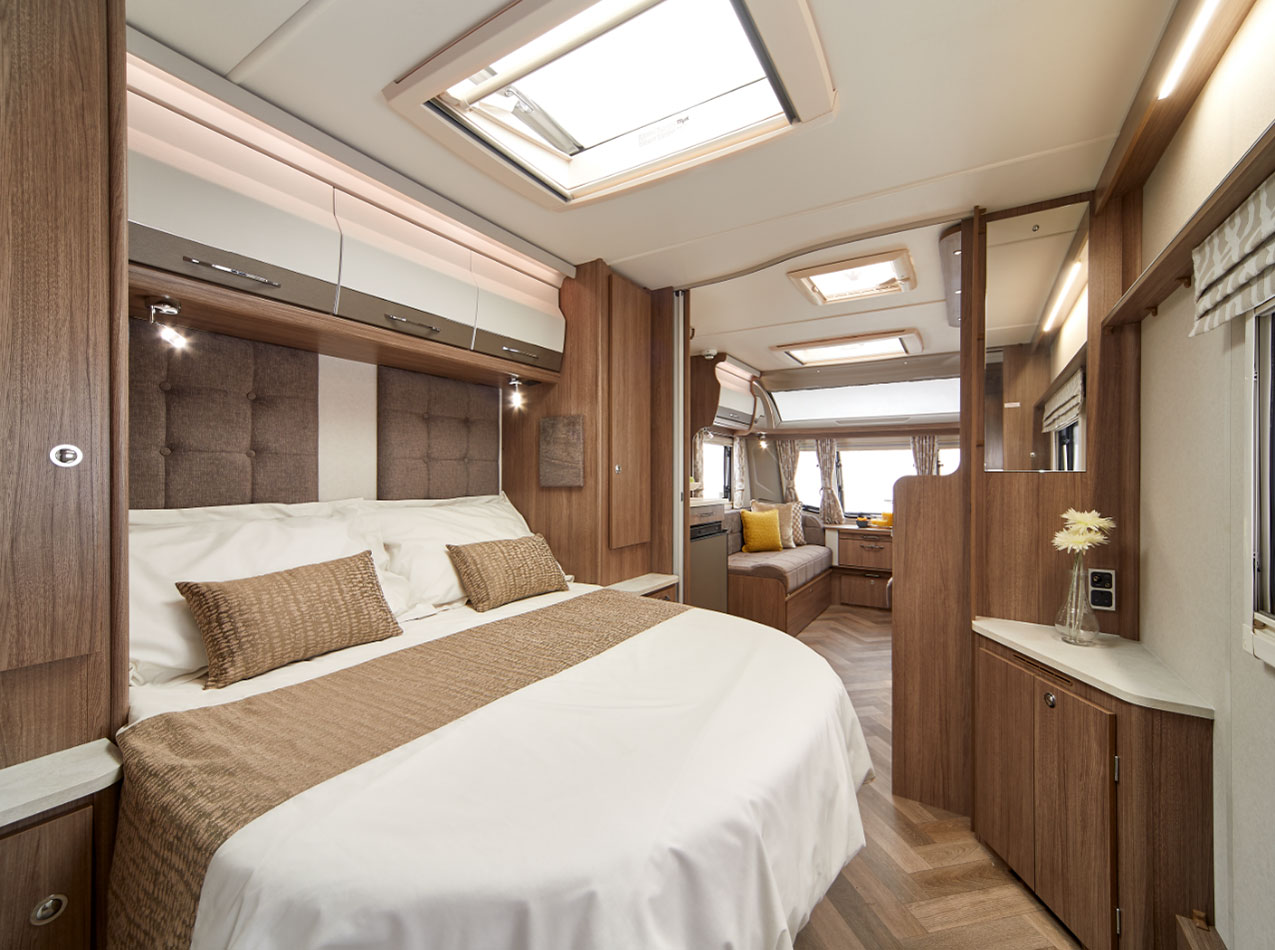
Good bedding makes the most obvious difference, so use bedding suited to the temperatures you expect rather than relying on turning the heating up. Loose-lay carpets or rugs make a hard floor feel warmer underfoot, as long as nothing you add covers a heater outlet or a fixed vent. Keep a warm layer accessible too. A decent waterproof and a pair of boots are far more use by the door than buried under the bed.
If you are buying with autumn and winter touring specifically in mind, look past the interior colour scheme and check the heating and insulation specification. The Laser range, for example, combines Alde wet central heating with EN1645 Grade 3 classification.
Heated flooring is worth having for regular cold-weather use where a caravan offers it, but do not assume it comes as standard just because a caravan has wet central heating. Check the individual model.
On site in winter
Cold-weather touring rewards a bit more planning, and one of its biggest attractions is exactly what puts some people off. Sites are quieter, destinations are less crowded, and it is a completely different experience from touring in the school summer holidays.
Fewer sites stay open through the winter, particularly smaller seasonal ones, so check opening dates before you set off. Hardstanding becomes much more important as well, since a pitch that is perfectly good in July turns soft after several days of autumn rain.
Try to arrive in daylight. Pitching, levelling and connecting services are all easier when you can see what you are doing. Carry a good torch and keep it in the car rather than inside the caravan. Think about the departure too: if you are parking on soft ground, consider how easily the tow car will pull the caravan off it if conditions get wetter during your stay.
If you are laying the caravan up instead
If your autumn trip is the last outing until spring, the preparation changes. Drain the water system fully, following the instructions for your specific caravan and covering the hot and cold systems along with any water heater or onboard tank. Clean the caravan out, remove food and valuables, and leave internal lockers and cupboards open so air can circulate. Clean and dry the fridge, then leave its door ajar rather than sealing moisture inside. Think about how the leisure battery will be maintained over the layup, and make sure your security equipment is active.
FAQs
Can you use a caravan in winter?
Yes. A modern caravan with effective heating and insulation is comfortable for autumn and winter touring. Check the individual model’s heating, insulation and water system specification and prepare it for freezing temperatures before you travel. Coachman’s current caravan ranges are cold-chamber tested to EN1645 Grade 3 for heating and insulation.
How do I stop my caravan pipes freezing?
Keep the caravan adequately heated while the water system is in use, and pay particular attention to external water containers and exposed connections. If the caravan will be left unheated or unused when temperatures may fall below freezing, follow the manufacturer’s drain-down procedure and remove the water from the system.
How do I stop condensation in a caravan?
Keep fixed ventilation clear, ventilate when cooking or showering, maintain sensible background heat and wipe away moisture that forms on cold surfaces. Do not block vents in an attempt to hold on to more heat.
Do I need to drain my caravan if I am still using it?
Not necessarily, if the caravan is occupied, heated and the water system is in use in conditions it is designed to handle. Freezing weather still puts exposed and unheated parts of the system at risk, though, so if you leave the caravan unused or switch the heating off when a freeze is expected, follow the manufacturer’s winterisation and drain-down instructions.
Is it worth having a heated floor for winter touring?
A heated floor improves comfort in cold conditions, particularly if you tour often outside summer. Treat it as an additional comfort feature rather than a substitute for good insulation and an effective heating system, and always check whether it is actually fitted to the model you are looking at.
What temperature should I leave the heating on overnight?
There is no single figure that suits every caravan or every person. Set a comfortable background temperature and follow the heating manufacturer’s instructions. What matters is not letting the interior get unnecessarily cold, and keeping ventilation going so moisture can escape.
Keep touring beyond summer
Autumn and winter offer some of the quietest and most rewarding touring of the year. Prepare the caravan properly, stay on top of heating, water and ventilation, and colder weather becomes a reason to travel rather than a reason to stop. Explore the latest Coachman caravans or find your nearest Coachman dealer if cold-weather comfort matters in choosing your next caravan.